
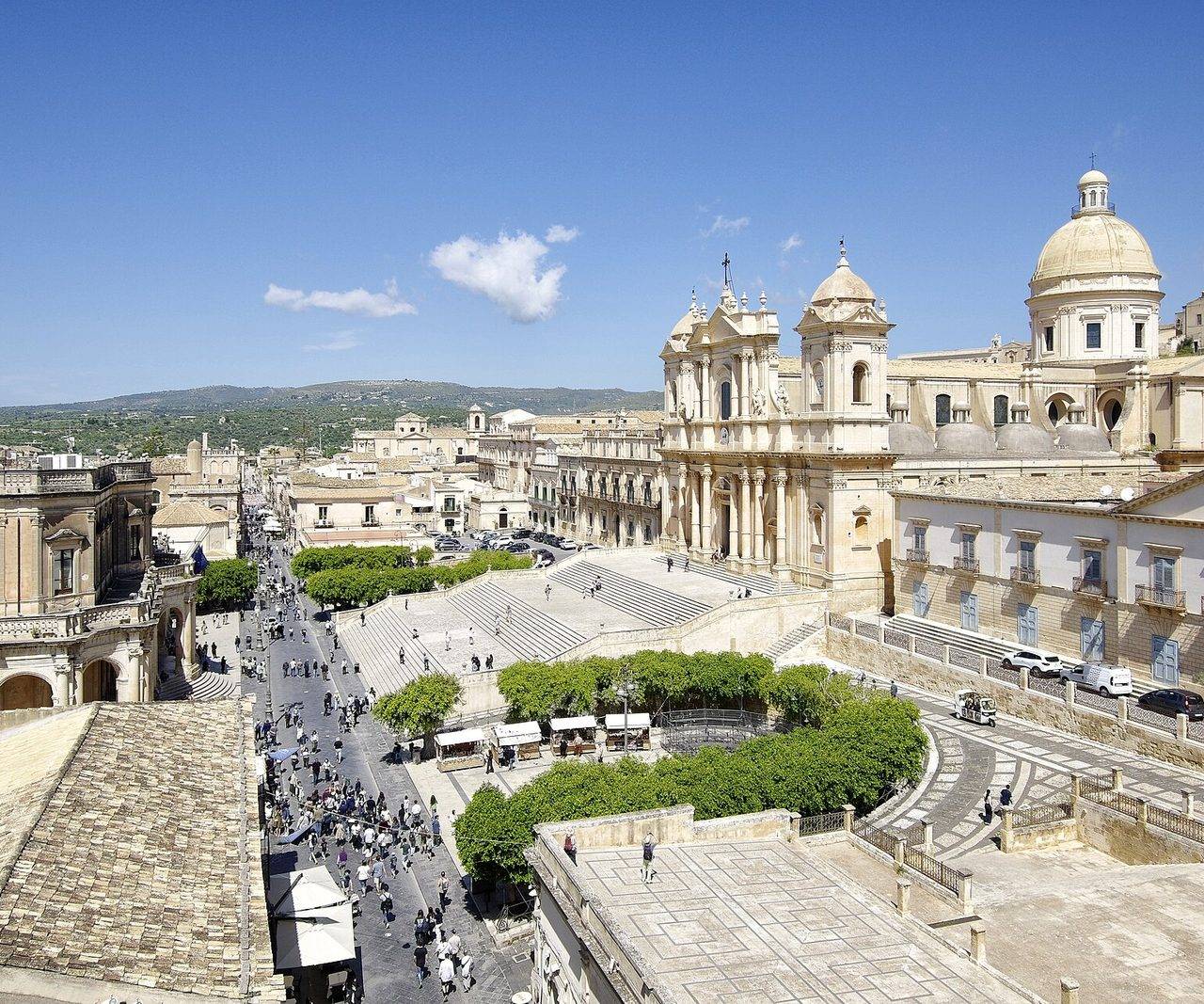
As the sun dips below the Iblean hills, Noto undergoes a sublime transformation. Its honey-coloured limestone facades absorb the golden light, setting the Baroque architecture ablaze in hues of apricot and rose. It is a suspended moment, when the air becomes thick with the scent of orange blossom and jasmine, mingling with the first tempting aromas from the kitchens.
To stroll along the Corso Vittorio Emanuele during the evening passeggiata is a cherished ritual. Families, couples, and visitors move with a relaxed elegance, admiring the sculpted balconies and monumental churches. It is an open-air stage where Sicilian life is performed in its most authentic and charming form, a prelude to the dinner to come.
My grandmother always said, “A Noto, non si mangia solo con la bocca, ma con gli occhi e con il cuore.” You eat not just with your mouth, but with your eyes and with your heart. This truth is rediscovered each evening, in every dish.
A Legacy on the Plate
Noto’s cuisine is a complex tapestry woven from history. The successive Greek, Arab, and Norman dominations have left an indelible mark, enriching the local gastronomic heritage. The Arab influence, in particular, introduced sugar, citrus, saffron, and cinnamon, laying the foundations for Sicily’s celebrated pastry-making tradition.
This heritage manifests both in the so-called cucina povera, which elevates simple ingredients like pulses and vegetables, and in the opulent dishes once reserved for aristocratic banquets. Here, even the humble fava bean is transformed into a masterpiece, macco di fave, a velvety purée seasoned with wild fennel.
Treasures of the Noto Valley
The almond is the undisputed queen of the region. The prized ‘Pizzuta d’Avola’ variety is the protagonist of sublime creations. One cannot visit Noto without starting the day with an almond granita, served with a soft, warm brioche col tuppo. It is a ritual best observed at one of the historic cafés in the centre.
From the almond also come the delicate biancomangiare, a silky almond milk pudding, and crunchy nougats known as torrone. Another local treasure is Nero d’Avola wine, an indigenous grape that finds its ideal terroir on these sun-drenched hills. A glass of this robust, fruity red is the perfect accompaniment to the bold flavours of Sicilian cooking.
From the Sea to the Table
The proximity of the Ionian Sea provides a fresh catch each day. Small fishing villages like Marzamemi, a short drive away, are guardians of ancient traditions, such as the crafting of cured tuna roe, or bottarga. Red prawns, swordfish, tuna, and sea urchins are the star ingredients of many memorable dishes.
A simple pasta with sardines, enriched with wild fennel, pine nuts, and raisins, tells the story of the island in a single bite. For a more elevated experience, restaurants such as Manna offer contemporary interpretations of these prime ingredients, creating dishes that strike a perfect balance between innovation and a respect for tradition.
A Practical Guide to Your Journey
To fully experience the enchantment of Noto, careful planning is essential. The city offers different experiences depending on the season and your preparation, turning a simple visit into a lasting memory.
The Ideal Season
Late spring and early autumn are the finest times to visit. May, with its famous Infiorata festival turning Via Nicolaci into a carpet of flowers, is magical but can be crowded. September and October offer pleasant temperatures, fewer people, and a beautiful, soft light, ideal for photography and for enjoying the city at a more leisurely pace.
Arrival and Exploration
The nearest airport is Catania-Fontanarossa (CTA). From there, hiring a car is almost essential for exploring not just Noto, but the entire Val di Noto, a UNESCO World Heritage site. This includes its sister towns of Ragusa and Modica, and the stunning nature reserves like Vendicari.
Noto's historic centre is made for walking. Park on the periphery and allow yourself to become lost in its alleys. The town is built on a slope, with the upper, more residential part, and the lower, monumental heart. Every corner reveals a surprise, be it a hidden church or a flower-filled courtyard.
Etiquette and Timings
Lunch is generally served between 1:00 PM and 2:30 PM, while dinner service begins later, rarely before 8:30 PM. The evening aperitivo is an important social ritual. A small courtesy, such as a “buongiorno” or “buonasera” when entering a shop or café, is always warmly appreciated.
Essential Reservations
During the high season (June to September) and for major events like the Infiorata, booking accommodation and notable restaurants well in advance is crucial. Winery tours, private tastings, and expert-led guided visits should also be arranged ahead of time to ensure availability and a seamless, high-quality experience.
Your Personal Itinerary
Noto is a destination of myriad facets, a place where art, culture, and gastronomy merge into one unforgettable experience. For a journey that perfectly reflects your personal tastes, from securing a stay in a charming private residence to arranging an exclusive wine tasting, the Covellea concierge is at your service to curate a tailored itinerary.