
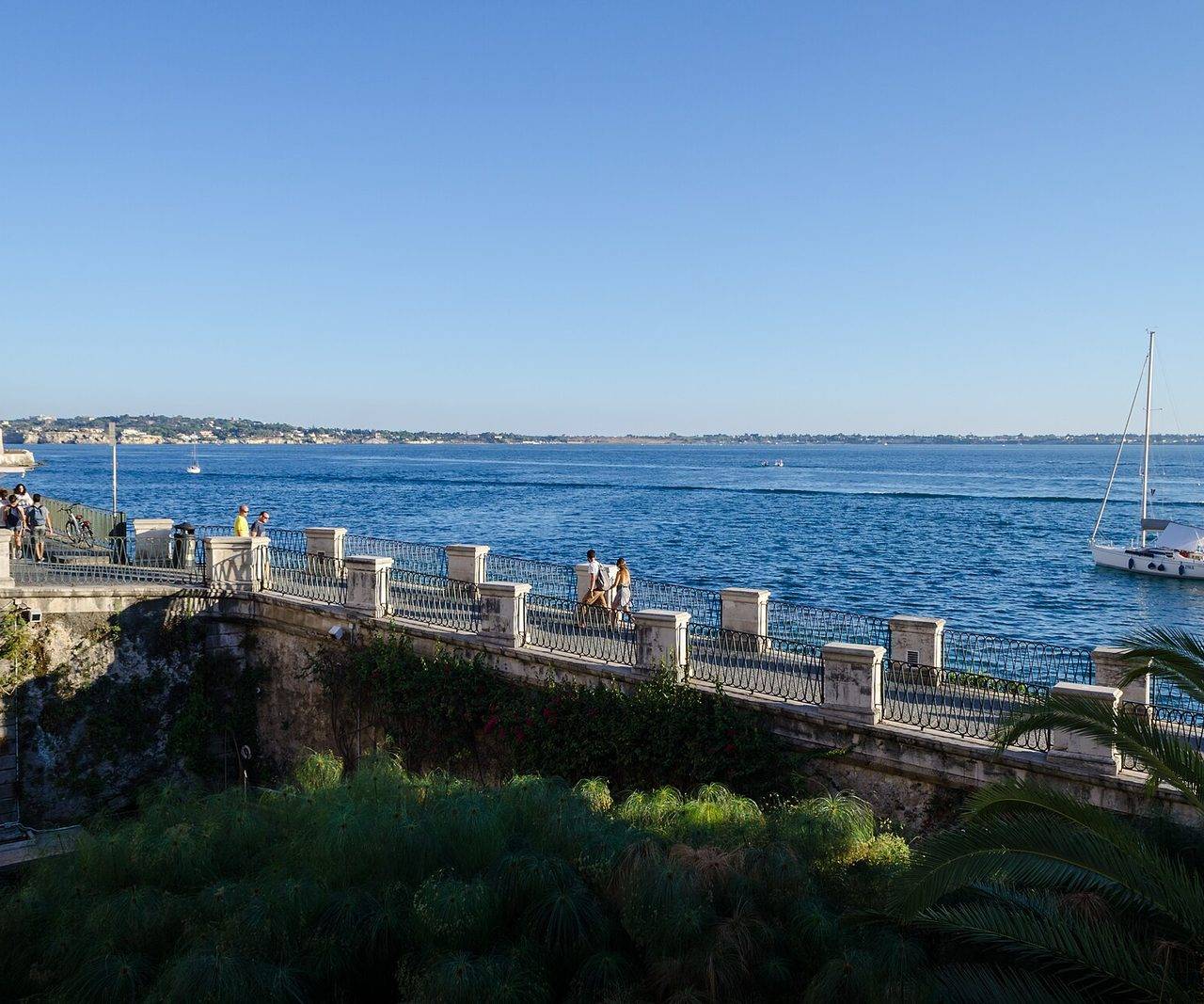
The first light of morning in Ortigia paints the Baroque facades in hues of rose and gold, a spectacle that always reminds me why this island is so much more than just a beautiful place to visit.
It’s a living museum, a continuous performance where every corner holds a story, every piazza whispers of centuries past.
When people ask me what makes Ortigia different from, say, the grand theatricality of Taormina or the refined elegance of Noto, I tell them it’s the layers.
Here, the Greek, Roman, Byzantine, Arab, Norman, and Spanish influences don't just exist side-by-side; they’ve fused into something uniquely Ortigian.
You feel it most vividly when you wander without a plan, perhaps down Via Cavour, stumbling upon a tiny artisan's workshop where coral is still carved by hand, or hearing the operatic strains from a window above the Mercato di Ortigia. This isn’t a place that boasts its treasures; it lets you discover them, like finding a forgotten fresco behind a flaking plaster wall.
The Echoes of Ancient Genius: Greek and Roman Legacies
To truly understand Ortigia's artistic soul, you must first acknowledge its foundational layers, especially the Greek influence. Siracusa, of which Ortigia is the historical center, was once Magna Graecia's most powerful city.
The Temple of Apollo, right at the entrance to the island, is one of the earliest Doric temples in Sicily, its weathered columns standing as a stark, powerful reminder of its origins. It's easy to walk past, seeing only ruins, but take a moment, let your imagination roam.
Picture the grandeur, the rituals, the daily life unfolding around it over two millennia ago.
Then there’s the Duomo, a building that epitomizes Ortigia’s layered history like no other. From the outside, it’s a breathtaking Baroque masterpiece, a vision in white stone against the deep blue sky of Piazza Duomo.
But step inside, and you’re walking through a space that began as a Greek temple dedicated to Athena in the 5th century BC. You can still see the massive Doric columns incorporated into the church's structure, a testament to an architectural recycling that transcends centuries.
It’s a feeling of profound continuity, of sacred space evolving but never truly disappearing. For a deeper dive into these ancient marvels, imagine having a private historian guide you through the archaeological park, bringing these stones to life in a way a guide book simply cannot.
Covellea's curated experiences often include such bespoke cultural immersions, transforming a visit into an academic adventure.
Baroque Splendor and the Allure of Piazza Duomo
Leaving the Duomo, you find yourself in Piazza Duomo, undoubtedly one of Italy’s most beautiful squares, and certainly my favorite place for an evening passeggiata. The piazza is a stage, enclosed by the Duomo, Palazzo Beneventano del Bosco, and the Chiesa di Santa Lucia alla Badia.
The light here, especially in the late afternoon, is ethereal, bouncing off the white limestone and illuminating the intricate carvings. This is where Ortigia’s Baroque heart beats strongest, a flamboyant expression of faith and wealth that followed the devastating earthquake of 1693.
The Chiesa di Santa Lucia alla Badia, often overshadowed by the Duomo, houses a true treasure: Caravaggio's 'Burial of Saint Lucy'. To stand before this painting, knowing its history and the artist’s turbulent life, is a moving experience.
It’s not just a painting; it’s a piece of Sicilian history, a poignant reminder of the island’s role in the grand narrative of European art. Viewing it in the quiet solitude of the early morning, before the crowds arrive, is a moment I cherish.
Consider a private viewing, perhaps arranged through our concierge, to truly appreciate this masterpiece in peace.
Contemporary Voices and Artistic Workshops
Ortigia isn’t stuck in the past; its artistic pulse beats vibrantly in the present. Walk away from the main tourist arteries and into the quieter lanes, particularly around Via Maestranza and Via Mirabella. Here, you’ll discover a proliferation of small galleries and artisan workshops.
These aren’t souvenir shops; they are places where contemporary Sicilian artists are creating, interpreting the island’s heritage through modern eyes.
You might find a painter whose canvases capture the luminous quality of the Ionian Sea, or a sculptor working with local materials like lava stone or terracotta.
There are ceramists keeping ancient traditions alive with fresh designs, and jewelers who transform coral and volcanic glass into wearable art. I particularly love stopping by some of the coral workshops near the Marina, where the intricate craft has been passed down through generations.
It’s an intimate look at the continuity of Sicilian artistry. Many visitors miss these spots, but they are essential to understanding the island's ongoing creative spirit.
For those interested in acquiring a unique piece, a tailored shopping excursion with a local art expert can be an incredibly rewarding experience.
The Culinary Art of Ortigia
To speak of Ortigia’s culture without mentioning its food would be a disservice. Food here is an art form, a reflection of every civilization that has graced these shores.
It’s in the vibrant colors of the Mercato di Ortigia, where fishermen proudly display their morning’s catch, and vendors stack pyramids of sun-ripened tomatoes and fragrant lemons.
It’s in the simple perfection of a 'pasta alla Norma', with its rich tomato sauce, fried eggplant, and grated ricotta salata, a dish that tastes of true Sicilian warmth.
Go for lunch at the market, perhaps at You might also enjoy Ortigia's Golden Hours: When to Savor Sicily's Island Jewel · Ortigia for Families: A Luxury Sicilian Escape · Ortigia's Azure Embrace: A Coastal Escape · Noto: A Baroque Dream Awakens